You’re driving down the road when you hear a sharp squeak every time you press the brake pedal. Maybe it turns into a harsh metal-on-metal sound that makes you turn down the radio and hope it goes away. Brake noises aren’t something drivers should ignore.
Understanding why your brakes are squeaking or grinding can help you avoid expensive repairs and, more importantly, keep you safe on the road.
Here’s what those sounds usually mean and when it’s time to schedule a professional inspection.
Why Are Your Brakes Squeaking?
Not every squeak means disaster. In many cases, squeaking brakes result from temporary conditions that don’t necessarily indicate major damage.
Morning moisture is one of the most common causes. Here in Mesa, Arizona, cooler overnight temperatures can create condensation on brake rotors. The first few stops of the day may produce a squealing sound until the moisture burns off.
Brake dust can also contribute to noise. Dust accumulates between the brake pad and rotor, creating vibrations that produce squeaks. Some brake pad materials naturally generate more noise than others.
Lack of lubrication on brake hardware is another possibility. Small components that help the brake pads move smoothly can dry out over time. Without proper lubrication, they may create irritating noises during braking.
Certain brake pad compounds are also naturally noisier than others. Semi-metallic pads, while durable, often produce more sound than ceramic alternatives. Brake squeal can result from friction vibrations within the braking system.
However, persistent squeaking shouldn’t be ignored.
When Squeaking Brakes Become a Warning Sign
Occasional squeaks that disappear quickly may not require immediate repairs. Constant squealing, especially when braking, deserves a closer look.
Watch for these accompanying symptoms:
- Brake squealing every time you stop
- Longer stopping distances
- Brake pedal vibration
- Dashboard brake warning lights
- Reduced braking performance
If the noise becomes more frequent or noticeable, it’s time for a professional brake inspection.
For Mesa, Arizona drivers dealing with daily stop-and-go traffic, waiting too long often leads to more extensive repairs.
Why Your Brakes Are Grinding
Unlike squeaking, a grinding noise is rarely harmless.
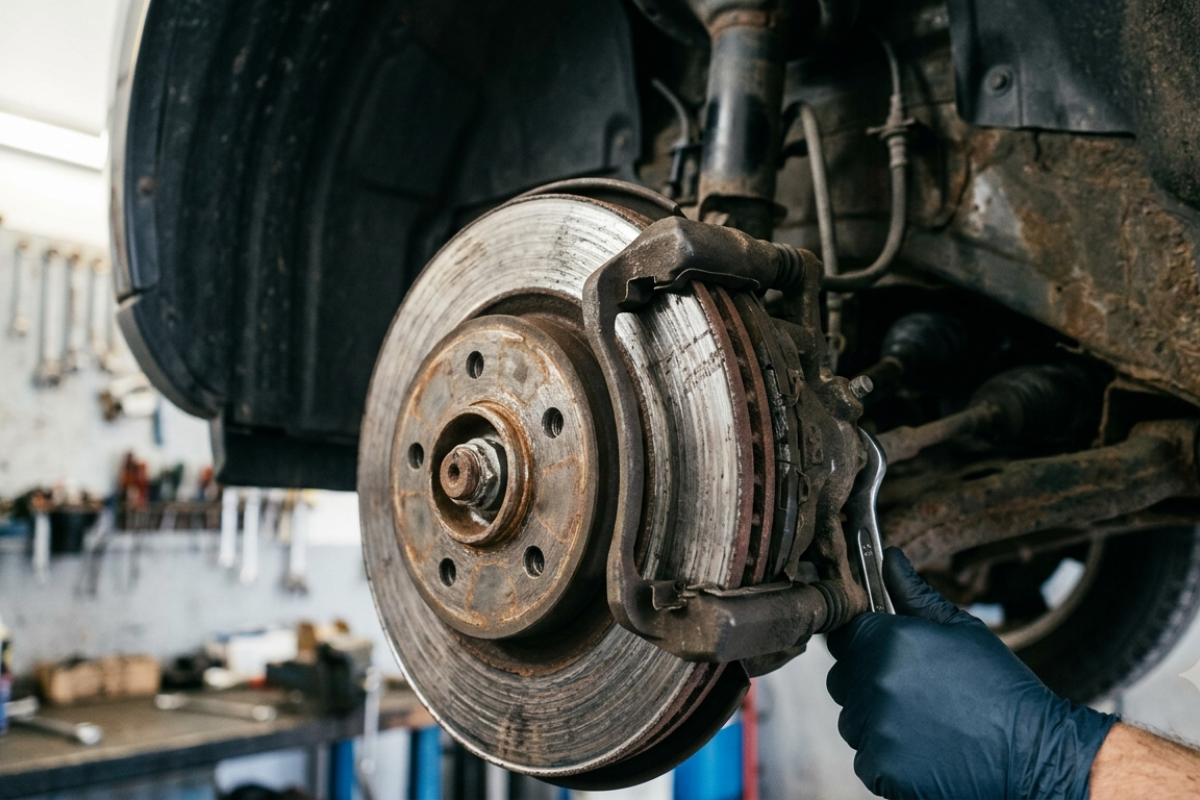
Grinding brakes usually indicate severe brake pad wear. Once the friction material wears completely away, the metal backing plate contacts the brake rotor directly.
This metal-to-metal contact creates the unmistakable grinding sound many drivers describe as “crunching” or “scraping.”
At this stage, the brake pads have moved beyond routine maintenance.
Ignoring the problem can quickly damage the rotors. Instead of replacing brake pads alone, drivers may end up needing rotor replacement as well.
Grinding can also indicate:
- Damaged brake hardware
- Foreign debris lodged in the brake assembly
- Severely rusted rotors
- Caliper problems preventing proper pad movement
Regardless of the cause, grinding warrants immediate attention.
What Happens If You Ignore Brake Noises?
Many drivers hope brake noises will disappear on their own.
Sometimes, squeaks caused by moisture do.
Grinding almost never does.
Continuing to drive with severely worn brakes increases repair costs and compromises stopping ability. Damaged rotors can become deeply grooved, reducing braking efficiency and requiring replacement.
Ignoring brake problems may also affect other components within the braking system.
The longer you wait, the more expensive the repair typically becomes.
Brake issues tend to follow a predictable pattern:
- Minor squeaking develops.
- Pad wear indicators begin warning you.
- Brake performance gradually declines.
- Grinding begins.
- Rotor damage occurs.
- Repair costs increase significantly.
Addressing problems early often means simpler, more affordable brake repair.
How a Professional Brake Inspection Helps
During a professional brake inspection, technicians evaluate the entire braking system, not just the pads.
This process may include checking:
- Brake pad thickness
- Rotor condition
- Brake caliper operation
- Hardware integrity
- Brake fluid condition
- Brake hoses and lines
- Signs of uneven wear
A qualified expert brake mechanic can determine whether your squeaking brakes require simple maintenance or more involved repairs.
At Accurate Automotive, serving Mesa, Arizona, since 1992, our ASE-certified technicians take the time to explain what they find. We believe drivers deserve honest diagnostics and clear communication without unnecessary recommendations.
As a family-owned and operated NAPA AutoCare Center, we provide repairs backed by warranty coverage, financing options, and a free local courtesy shuttle to help make the process more convenient.
At Accurate Automotive, We’re Here to Help
At Accurate Automotive, a trusted auto repair shop in Mesa, Arizona, since 1992, family-owned and operated, we provide honest diagnostics, clear communication, and repairs done right the first time.
Don’t wait until a minor squeak turns into costly damage. If you’ve noticed unusual brake noises, schedule a professional inspection with our team of ASE-certified technicians.
We’re proud to serve drivers across Mesa, Arizona, and throughout Maricopa County with reliable brake services that help keep you safe on the road.
Call us at (480) 890-0409 or reach our Facebook page.
Frequently Asked Questions
Why are my brakes squeaking?
Brakes may squeak due to morning moisture, brake dust, worn hardware, lubrication, or certain brake pad materials. Persistent squeaking should be inspected by a professional.
Is it safe to drive with squeaking brakes?
Occasional squeaking caused by moisture may not be serious, but constant squealing can indicate worn brake pads or other brake system issues that require inspection.
What causes brakes to make a grinding noise?
Grinding usually means the brake pads have worn completely down, allowing metal to contact the brake rotors. This requires immediate repair to prevent further damage.
How often should I have my brakes inspected?
Most vehicles should have the brakes inspected at least once a year or during routine maintenance. Drivers in heavy stop-and-go traffic may benefit from more frequent inspections.
What happens if I ignore brake grinding?
Ignoring grinding brakes can damage the rotors, reduce stopping power, increase repair costs, and create a serious safety risk.
What does a professional brake inspection include?
A brake inspection typically includes checking brake pad thickness, rotor condition, calipers, hardware, brake fluid, hoses, lines, and signs of uneven wear throughout the braking system.