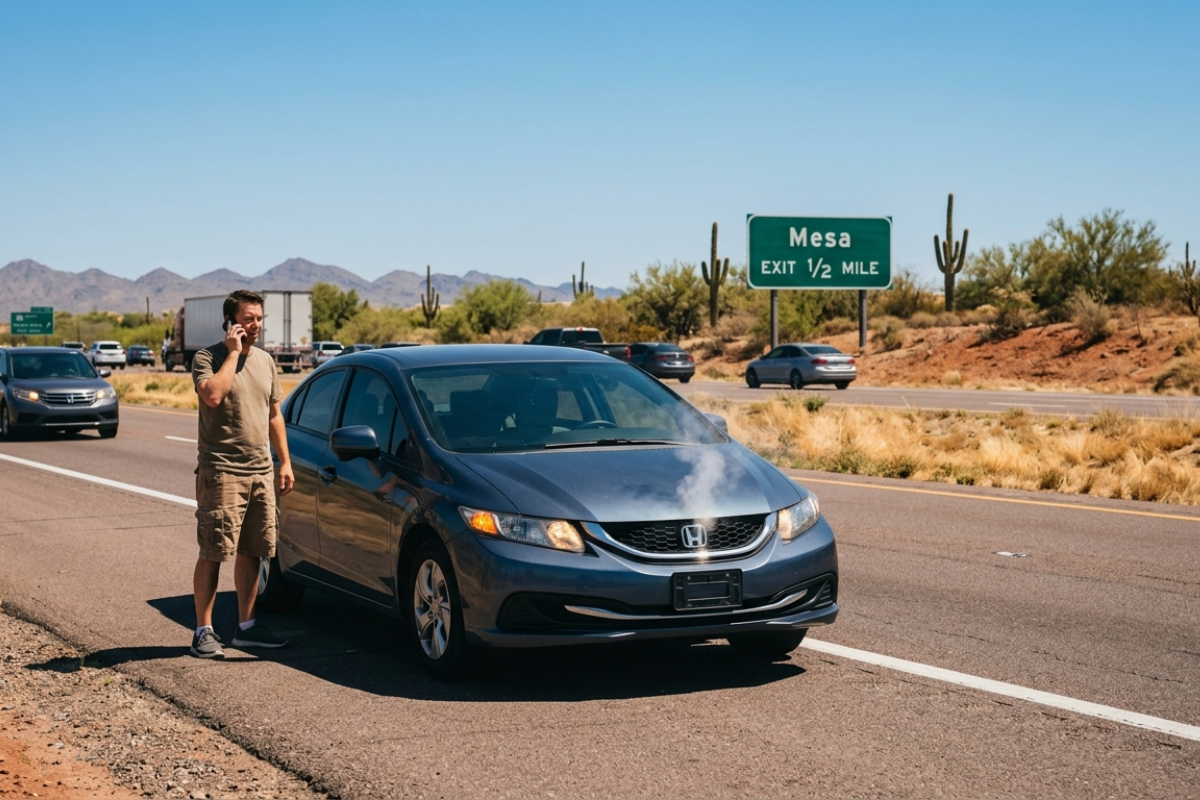
You’re cruising through Mesa traffic with the A/C blasting when you notice the temperature gauge climbing higher than normal. Then you see steam coming from under the hood. In Arizona, this situation can escalate quickly.
Knowing what to do if your car overheats can mean the difference between a minor repair and catastrophic engine failure.
Here’s how Mesa, Arizona, drivers can respond safely while preventing engine damage.
Take Immediate Action When You Notice a Car Overheating
The moment you notice your temperature gauge entering the danger zone or an overheating warning light appears, don’t ignore it.
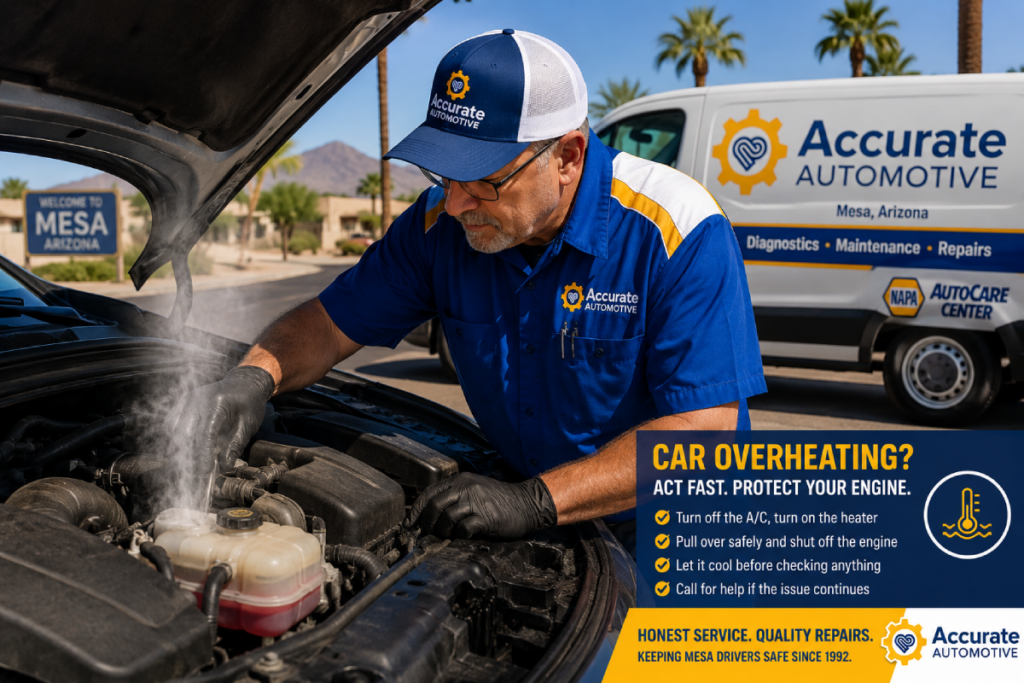
First, turn off your air conditioning. The A/C places additional strain on the engine and cooling system.
Next, turn your heater to maximum temperature and full fan speed.
It sounds counterintuitive during a Mesa summer, but the heater pulls excess heat away from the engine compartment. This temporary measure may help lower engine temperatures enough to safely reach a stopping point.
Then, find a safe place to pull over.
Do not continue driving “just a few more miles.” Even a short distance with an overheated engine can result in severe damage to cylinder heads, head gaskets, and internal engine components.
AAA advises pulling over as soon as it is safe and allowing the engine to cool before investigating further.
Shut Off the Engine and Be Patient
Once you’ve safely stopped, turn the engine off immediately.
Resist the urge to investigate right away.
Leave the hood closed for at least 15 to 30 minutes. The cooling system remains pressurized, and temperatures under the hood can exceed safe handling levels.
One of the biggest mistakes drivers make is opening the radiator cap while the engine is hot.
Never do this.
Hot coolant under pressure can erupt from the radiator and cause severe burns.
Know What You Can Safely Check
After sufficient cooling time, you can perform a limited visual inspection.
Look for obvious warning signs, including:
- Coolant puddles beneath the vehicle
- Steam residue
- Broken belts
- Damaged hoses
- Strong sweet odors associated with coolant leaks
If the coolant reservoir is clearly below the recommended level and your owner’s manual permits topping it off, you may add the correct coolant mixture.
However, adding coolant addresses the symptom, not the underlying cause.
Call Your Local Mesa Mechanic for Help
If your vehicle overheats, don’t attempt to drive it.
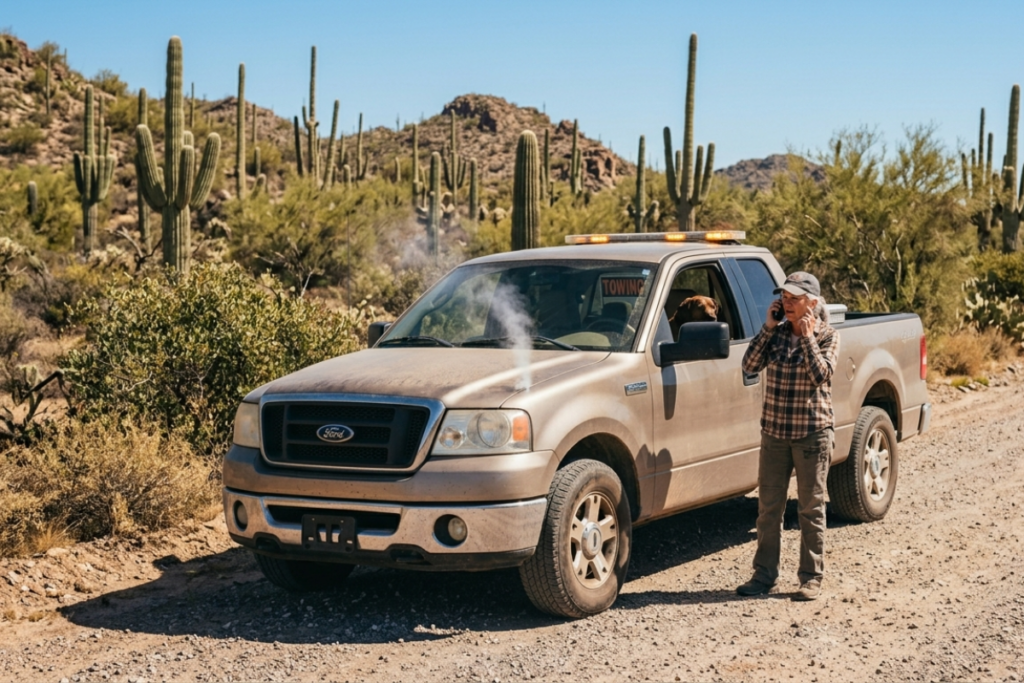
Call for roadside assistance or a tow.
This is especially important if:
- The temperature gauge remains high
- You hear knocking noises
- Warning lights stay illuminated
- Coolant rapidly disappears
- Steam continues after shutdown
A professional inspection can identify the source of the problem before additional damage occurs.
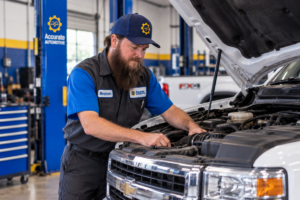
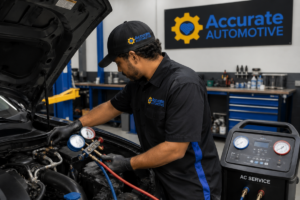
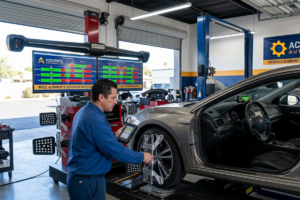
Our ASE-certified technicians frequently diagnose overheating issues involving radiator failures, failing thermostats, weakened hoses, cooling fan problems, and water pump concerns.
Why Mesa, Arizona Driving Conditions Increase Overheating Risk
Here in Mesa, Arizona, your vehicle faces conditions unlike many other parts of the country.
Triple-digit temperatures are common for months at a time. Add stop-and-go traffic on roads like US-60 and Loop 202, extended idling, constant A/C use, and long commutes across Maricopa County, and your cooling system is working overtime.
The Phoenix metropolitan area creates what many technicians describe as a perfect storm for overheating:
- Extreme desert heat
- Hot pavement temperatures
- Heavy traffic congestion
- Reduced airflow while idling
- Dust and debris accumulation
- Increased A/C demand
A cooling system that functions adequately elsewhere may struggle under Mesa’s conditions.
Small issues such as low coolant levels, aging hoses, or a weak radiator fan often reveal themselves during Arizona summers.
Common Causes Behind Car Overheating
Low coolant remains one of the most frequent causes.
Other possibilities include:
- Cooling system leaks
- Failed radiator fans
- Faulty thermostats
- Water pump failure
- Clogged radiators
- Damaged hoses
- Worn drive belts
Prevent Future Overheating Problems
Mesa, Arizona, drivers can reduce overheating risks through proactive maintenance.
Regular inspections should include:
- Coolant condition checks
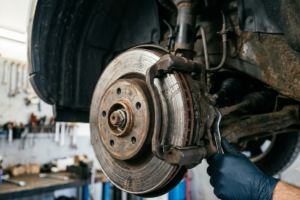
- Cooling system pressure testing
- Radiator inspections
- Thermostat evaluations
- Water pump inspections
- Fan operation testing
- Hose and belt inspections
Desert heat accelerates wear on cooling components.
Preventive maintenance helps identify weaknesses before they strand you roadside during a 110-degree afternoon commute.
Conclusion: Trust Accurate Automotive When Your Car Overheats
At Accurate Automotive, serving Mesa, Arizona since 1992, we’ve helped countless car owners navigate Arizona’s toughest driving conditions. As a family-owned and operated NAPA AutoCare Center staffed by ASE-certified technicians, we believe in honest diagnostics, clear communication, and repairs done right the first time.
If your vehicle is overheating, don’t wait until minor cooling issues become major engine repairs. Our experienced professional mechanics provide comprehensive cooling system service, warranty-backed repairs, financing options, and a free local courtesy shuttle to help keep you moving.
If you need a trusted Mesa car repair shop after an overheating incident, Accurate Automotive is here to help drivers across Maricopa County get safely back on the road.
Call us at (480) 890-0409 or reach our Facebook page.
Frequently Asked Questions
What should I do immediately if my car overheats while driving?
Turn off the A/C, turn the heater to maximum, and safely pull over as soon as possible. Shut off the engine and allow it to cool before inspecting anything.
Is it safe to keep driving an overheating car?
No. Continuing to drive can cause severe engine damage, including blown head gaskets, warped cylinder heads, and internal component failure.
Why should I turn on the heater when my car overheats?
The heater helps pull excess heat away from the engine, which may temporarily reduce engine temperature and help you reach a safe stopping location.
Can I open the radiator cap when the engine is hot?
No. A hot cooling system is pressurized, and removing the radiator cap can release scalding coolant and steam, causing serious burns.
What causes a car to overheat in Mesa, Arizona?
Common causes include low coolant, radiator leaks, faulty thermostats, failed cooling fans, water pump issues, clogged radiators, damaged hoses, and worn belts. Extreme Arizona heat increases the risk.
How can I prevent my car from overheating?
Schedule regular cooling system inspections, check coolant levels, inspect hoses and belts, test radiator performance, and address minor issues before they become major repairs.