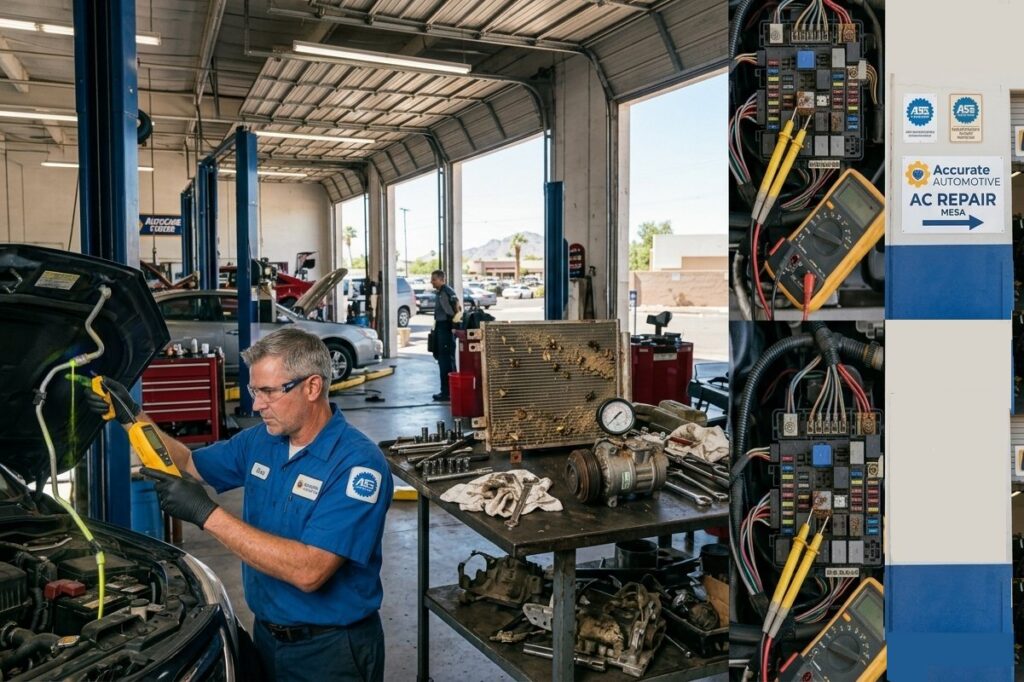
When your car AC is blowing warm air in Mesa, Arizona, it doesn’t take long for a comfortable drive to become miserable.
Weak or warm airflow can come from low refrigerant, a failing compressor, a clogged condenser, or even a small electrical problem.
Knowing the common causes of auto AC problems can help you recognize when it’s time to have the system professionally diagnosed.
1. Refrigerant Leak
Refrigerant is what allows your air conditioning system to absorb heat from inside the cabin and release it outside. When the system loses refrigerant, cooling performance drops, and you may eventually get nothing but warm air from the vents.
Unlike engine oil or gasoline, refrigerant isn’t something your vehicle should normally consume. If it’s low, an expert technician should check the system for leaks instead of simply adding more refrigerant.
Leaks can develop around hoses, seals, fittings, the condenser, compressor, or evaporator.
If your AC starts cold but gradually becomes warmer over weeks or months, refrigerant loss should be investigated.
2. Failing AC Compressor
The compressor is one of the most important components in your vehicle’s air conditioning system. It circulates refrigerant so the AC system can remove heat from the cabin.
When the compressor fails or can’t engage correctly, you may notice the AC not blowing cold air, unusual noises when the system is switched on, or cooling that works intermittently.
Compressor problems shouldn’t automatically lead to compressor replacement. Proper diagnosis matters because electrical issues, refrigerant loss, sensors, wiring, or other components can prevent the compressor from operating normally.
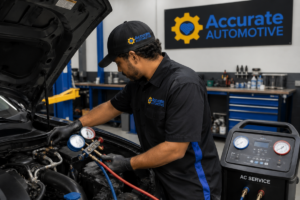
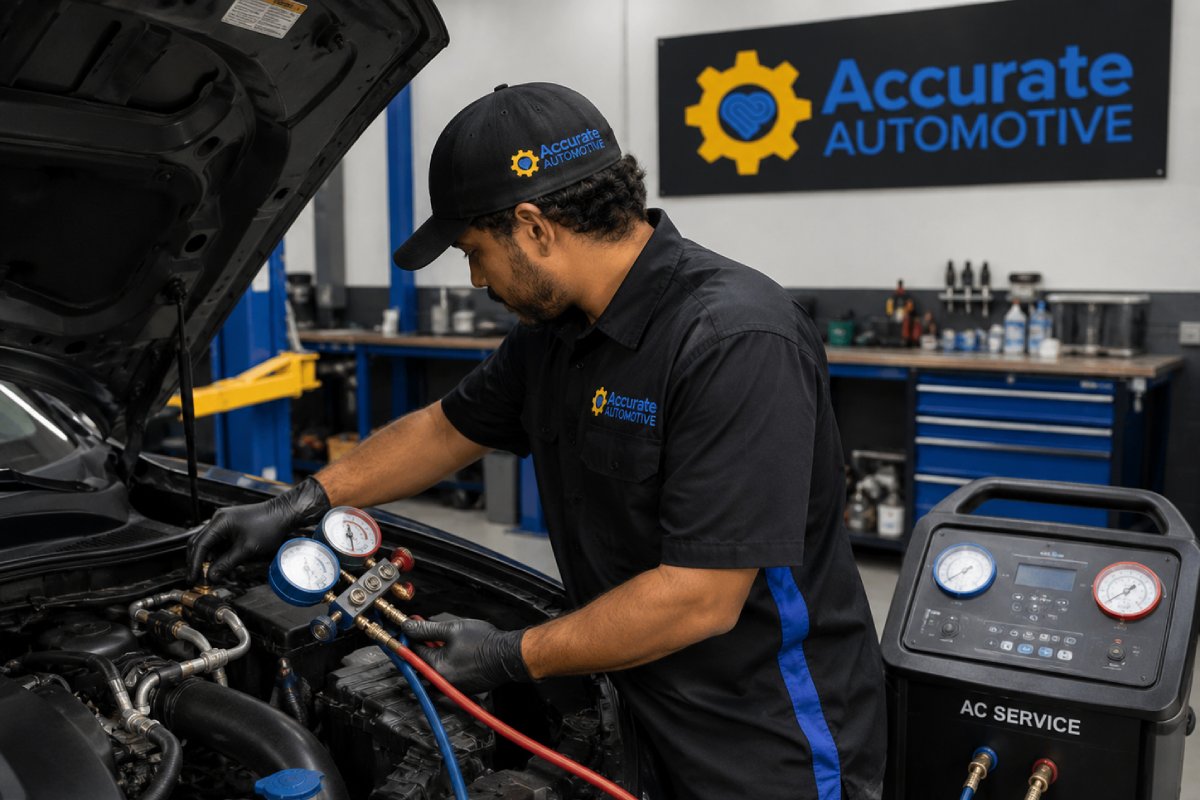
An expert AC technician can test pressures, compressor operation, and related components before recommending a repair.
3. Clogged or Damaged Condenser
The condenser normally sits toward the front of the vehicle, where airflow helps it release heat carried by the refrigerant.
Dirt, road debris, bent fins, or internal restrictions can reduce its ability to transfer heat. Damage can also create refrigerant leaks.
Here in Mesa, Arizona, dust and debris are familiar parts of everyday driving. If the condenser can’t release heat efficiently, your AC may struggle even more during a hot afternoon or while you’re sitting in traffic.
Experienced mechanics can inspect the condenser for damage, contamination, restricted airflow, and leaks. Fixing the actual cause is important because adding refrigerant won’t solve a damaged or restricted condenser.
4. A Blend Door Actuator May Be Stuck
Sometimes your AC system is producing cold air, but that cold air isn’t reaching you correctly.
Inside the dashboard, blend doors control where air travels and how much heated or cooled air enters the cabin. Small electric actuators move these doors based on the temperature setting you select.
When an actuator fails or a blend door becomes stuck, warm air may mix with cooled air. One vent may even feel warmer than another.
You might also hear clicking or tapping from behind the dashboard when adjusting the temperature.
Because these parts are hidden inside the HVAC system, diagnosis at a qualified mechanic shop can help determine whether the problem is the actuator, door, control module, or another component.
5. Dirty Cabin Air Filter
If the air coming from your vents feels weak rather than simply warm, check the cabin air filter.
The filter catches dust, pollen, and other airborne debris before air enters the passenger compartment. Over time, it can become clogged enough to restrict airflow through the HVAC system.
That matters for Mesa, Arizona drivers who regularly deal with dust and desert conditions. A heavily restricted filter can make the AC seem less effective because you’re getting less airflow from the vents.
Replacing a dirty cabin filter is relatively simple on many vehicles. However, if airflow remains weak afterward, the blower motor, evaporator, electrical system, or other HVAC components may need inspection.
6. Electrical Problems
Modern automotive AC systems depend on more than refrigerant and mechanical components. Fuses, relays, switches, sensors, wiring, control modules, and blower circuits all help the system operate.
A blown fuse or faulty relay could prevent the compressor from engaging. A wiring problem could also interrupt power to the blower motor or another critical component.
Electrical issues can be especially confusing because symptoms aren’t always consistent. The AC might work one day and stop the next, or it may cut in and out while you’re driving.
An ASE-certified technician can test the electrical system instead of replacing parts based only on symptoms. Accurate diagnosis can save you from paying for components your vehicle doesn’t need.
Accurate Automotive: Mesa AC Repair You Can Depend On
When your AC isn’t blowing cold air, Accurate Automotive can diagnose the problem and explain what your vehicle actually needs. We’ve been serving Mesa, Arizona since 1992 as a family-owned and operated complete auto repair service center with ASE-certified technicians.
Our team works on all makes and models using modern diagnostic equipment. As a NAPA AutoCare Center, we also offer warranty options, financing options, and a free local courtesy shuttle to make getting your vehicle serviced easier.
Don’t wait until warm air turns into no AC during a Mesa summer afternoon.
Contact Accurate Automotive to schedule an AC auto inspection and let our repair specialists find the cause and help get cold air flowing again for drivers across Mesa, Arizona, and Maricopa County.
Call us at (480) 890-0409 or reach our Facebook page.
Frequently Asked Questions
Why is my car AC blowing warm air instead of cold?
Your car’s AC may blow warm air due to a variety of mechanical or electrical issues. The six most common causes include a refrigerant leak, a failing compressor, a clogged or damaged condenser, a faulty blend door actuator, a clogged cabin air filter, or electrical problems such as blown fuses or bad relays. A professional inspection using modern diagnostic tools is the best way to pinpoint the exact issue.
Is it safe to drive my car if the AC is blowing warm air?
Yes, driving with a warm AC is generally safe for your engine, provided the issue is limited to the HVAC system (like a bad actuator or dirty cabin filter). However, if the issue stems from a seized compressor clutch or electrical fault affecting cooling fans, it could lead to engine overheating or belt damage. In extreme desert temperatures like those in Mesa, driving without AC can also pose safety risks due to heat fatigue.
Can I just add more refrigerant if my car AC isn’t cold?
Simply adding refrigerant is rarely a permanent solution. Automotive AC systems are sealed; if your refrigerant is low, it means there is a leak somewhere in the hoses, seals, condenser, or evaporator. An expert technician should locate and repair the leak before recharging the system to prevent immediate loss of cooling again.
How does a dirty cabin air filter affect my car’s AC performance?
A clogged cabin air filter restricts the volume of air flowing through your dashboard vents. While it doesn’t change the temperature of the air produced by the system, reduced airflow can make your AC feel weak and ineffective—especially in dusty environments like Mesa, Arizona. Replacing the filter often restores proper airflow.
What are the signs of a failing AC compressor?
Common symptoms of a failing AC compressor include warm air coming from the vents, unusual squeaking or grinding noises when turning on the AC, or cooling that works intermittently. Because sensors, electrical issues, or low refrigerant levels can also prevent the compressor from turning on, a complete diagnostic test is essential before replacing any major parts.