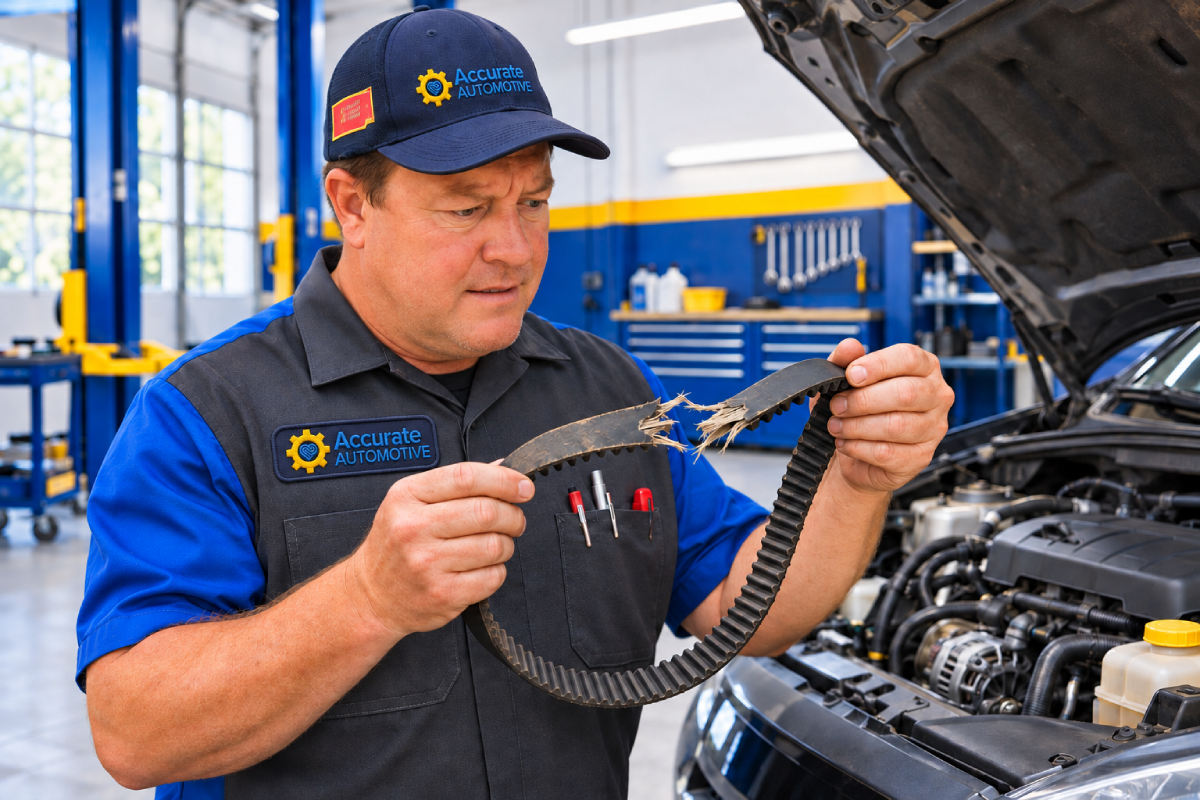
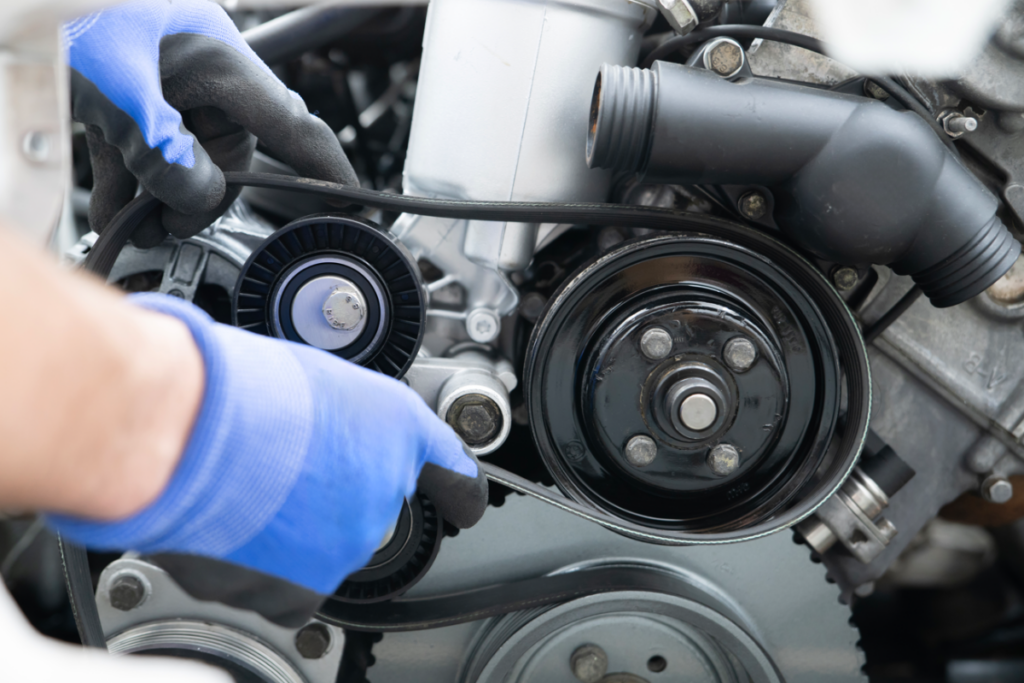
If your timing belt breaks while you’re driving, the engine can shut off suddenly and leave you coasting. The damage may be limited or severe, depending on your engine design.
Here’s what drivers should know about a broken timing belt, what to do if it happens, and which timing belt failure signs are worth checking.
What Happens When a Timing Belt Breaks?
- The camshaft can stop turning while the crankshaft and pistons are still moving, throwing off engine timing.
- The engine usually stalls suddenly, and you may lose power steering assist and some brake assist.
- In a non-interference engine, the pistons and valves are less likely to collide, so the engine may avoid major internal damage.
- In an interference engine, a moving piston can strike an open valve, bending or breaking valves and possibly damaging pistons or the cylinder head.
- Turn on your hazard lights, steer to a safe place, and arrange for a tow. Don’t try to restart the engine.
Why Interference vs. Non-Interference Engine Design Matters
In a non-interference engine, the pistons and open valves don’t occupy the same space. A broken belt still stops the engine, but piston-to-valve contact is less likely. A technician will still need to inspect the engine and related parts before installing a replacement belt.
In an interference engine, pistons and valves use some of the same space at different points in the engine cycle. If the belt breaks, a piston may strike a valve left open. The impact can bend or break valves, damage pistons or the cylinder head, and sometimes harm other engine components.
The exact damage depends on the engine and what was happening when the belt failed. Some vehicles need extensive engine repairs or replacement; others may have less damage. Don’t assume which design your car has based on its make alone.
A timing belt repair specialist can check the engine specifications and assess the damage.
Watch for Timing Belt Failure Signs
- Ticking or tapping noises: These may come from a worn timing system component, such as a tensioner or pulley.
- Misfires or rough running: A slipped belt can disrupt engine timing and affect how the engine runs.
- Poor acceleration: Incorrect timing can reduce engine performance.
- Oil near the timing belt cover: A leak can expose the belt to oil, which may damage it.
- Check engine light: A timing problem may trigger a warning, though the light alone doesn’t confirm belt failure.
- Unknown service history or an overdue replacement: Ask your mechanic for service intervals and check your owner’s manual. Some belts fail without obvious warning signs.
Protect Your Engine with Accurate Automotive in Mesa, AZ
If your car has stalled or you’re unsure when its timing belt was last replaced, contact Accurate Automotive to arrange an inspection.
We’ve served Mesa since 1992 as a family-owned and operated shop, with ASE-certified technicians and NAPA AutoCare Center service. Warranty Available, Financing Options, and a Free Local Courtesy Shuttle are available to help make your visit easier.
Call or schedule with Accurate Automotive for help in Mesa, Arizona.
Call us at (480) 890-0409 or reach our Facebook page.
Frequently Asked Questions
What happens when a timing belt breaks while driving?
The engine usually stalls suddenly because the camshaft stops turning in sync with the crankshaft. You may lose power steering assist and some brake assist.
Can a broken timing belt damage the engine?
Yes. In an interference engine, pistons can strike open valves, potentially bending or breaking valves and damaging pistons or the cylinder head.
Is a broken timing belt less damaging in a non-interference engine?
Piston-to-valve contact is less likely in a non-interference engine, but a technician should still inspect the engine and related parts.
What should I do if my timing belt breaks while driving?
Turn on your hazard lights, steer to a safe place, and arrange a tow. Don’t try to restart the engine.
What are signs of a timing belt problem?
Possible signs include ticking or tapping noises, misfires, rough running, poor acceleration, oil near the timing belt cover, or a check engine light. Some belts fail without obvious warning.
How do I know when my timing belt needs replacement?
Check your owner’s manual for the service interval and ask a mechanic to review the vehicle’s service history and engine specifications.