
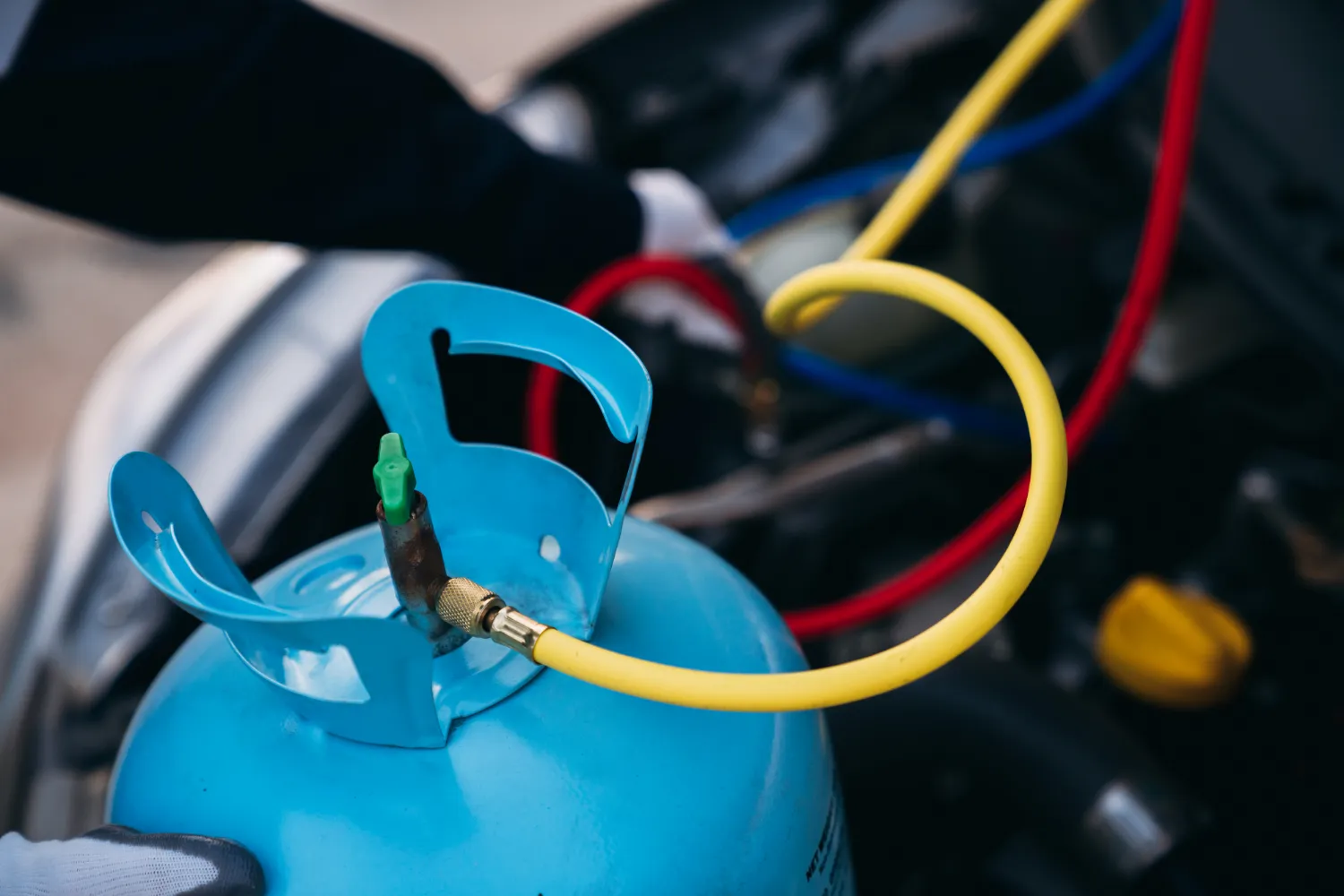
When Your AC Stops Blowing Cold Air in the Arizona Heat
Imagine driving through Mesa in July, and your air conditioning starts blowing warm air. With temperatures soaring past 110 degrees, your vehicle’s interior feels like an oven. Your family is uncomfortable, you’re sweating through your clothes, and you’re wondering how much this repair will cost—and who you can trust to fix it without upselling unnecessary services.
If your vehicle uses R134A refrigerant and your AC system isn’t keeping you cool, you’re facing more than discomfort. In Arizona’s extreme heat, a failing AC system is a safety issue that affects your family’s wellbeing and your ability to get to work reliably.
At Accurate Automotive, located at 441 S. Robson Mesa, AZ 85210, we understand your concerns. Many shops use scare tactics or charge dealership prices for simple repairs. That’s why we built our business on a foundation of trust: Friends… Serving Friends. When you bring your vehicle to us for R134A refrigerant replacement, you’re not just another transaction. You’re working with ASE-certified master technicians who explain your options clearly and never pressure you into services you don’t need.
Understanding R134A Refrigerant and Why Your AC System Needs It
Your vehicle’s AC system relies on R134A refrigerant to absorb heat from inside your cabin and release it outside, creating the cold air that makes Arizona summers bearable. When this refrigerant leaks or becomes depleted, your AC system can’t function properly, leaving you with weak airflow, warm air, or complete system failure.
R134A refrigerant has been the standard automotive refrigerant since the mid-1990s when it replaced the older R12 refrigerant due to environmental concerns. If your vehicle was manufactured after 1994, it almost certainly uses R134A. This refrigerant works in conjunction with critical components like the compressor, condenser, expansion valve, and evaporator. When refrigerant levels drop due to leaks, the entire process becomes inefficient or stops working altogether.
Common Signs Your Vehicle Needs R134A Refrigerant Replacement
AC Performance Issues:
- Air conditioning blows warm or lukewarm air instead of cold.
- AC works intermittently, cold one moment and warm the next.
- Reduced airflow even when the fan is on high.
- AC takes longer to cool the cabin than it used to.
- System makes unusual hissing or bubbling sounds.
When your AC starts blowing warm air, it’s often the first and most obvious sign that refrigerant levels have dropped. Intermittent cooling or better performance at highway speeds can also indicate a refrigerant leak. These issues will only worsen over time if left unaddressed.
Visual and Physical Indicators:
- Visible oil residue around AC components indicating refrigerant leaks.
- Ice formation on AC lines or compressor.
- AC clutch not engaging when you turn on the system.
- Musty or unusual odors when the AC is running.
Oil residue around AC components is a reliable indicator of a refrigerant leak. Ice formation on AC lines or the compressor suggests a serious problem, as low refrigerant levels can cause the evaporator temperature to drop below freezing. Ignoring these signs can lead to more expensive repairs, such as compressor failure.
Why R134A Refrigerant Replacement Requires Professional Service
AC refrigerant replacement requires specialized equipment, EPA certification, and technical expertise. Federal law prohibits venting refrigerants into the atmosphere, so proper recovery and recycling equipment is mandatory. Identifying refrigerant leaks also requires diagnostic tools and experience beyond DIY methods.
Professional refrigerant service involves much more than simply hooking up a can of refrigerant. Technicians must recover any remaining refrigerant, perform a vacuum test to check for leaks, and add the precise amount of refrigerant specified by your vehicle’s manufacturer. Too little refrigerant reduces cooling capacity; too much can damage the compressor.
At Accurate Automotive, our technicians perform a comprehensive AC system inspection that includes:
- Electronic leak detection to pinpoint refrigerant escape points.
- Pressure testing to verify system integrity.
- Compressor function evaluation.
- Condenser and evaporator inspection.
- AC line and connection assessment.
This thorough approach ensures you’re not just getting a temporary fix. You’re receiving a proper repair that addresses the root cause and restores your AC system to factory performance standards.
The Accurate Automotive Difference: Transparency and Trust
The automotive repair industry has earned a reputation for taking advantage of customers who don’t understand the technical details of their vehicles. At Accurate Automotive, we recognize that trust must be earned through consistent, transparent actions—not just claimed through marketing slogans. Our “Friends… Serving Friends”” philosophy isn’t a catchy tagline