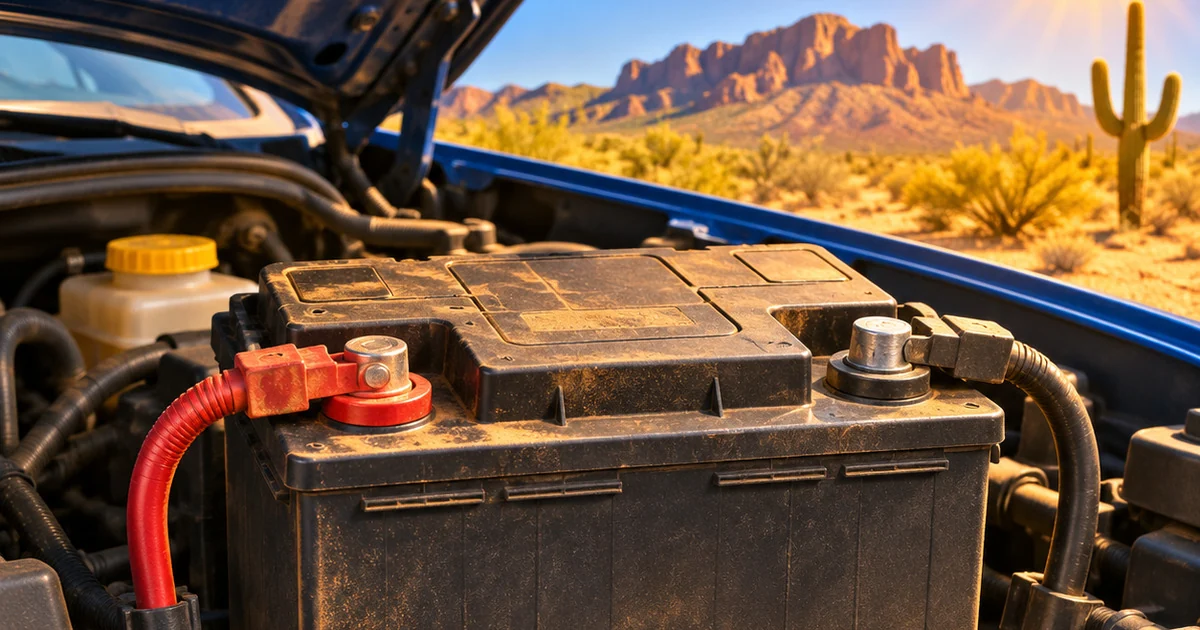
You come back to Mesa after a summer away, press the start button, and the engine turns over slowly instead of starting the way it used to. Sometimes you only hear a click, or nothing happens at all. The short answer is that a long, hot summer without driving can leave a battery discharged, worn down, or both. But a slow start after storage does not prove the battery is the only problem. A loose connection, a charging system that was not keeping up, or an electrical draw that never shut off can cause the same symptoms.
This article explains what happens to a battery while a car sits, how Arizona heat fits in, what to notice before you ask for help, how to stay safe around a weak or damaged battery, and what a shop may want to look at before recommending a new battery.
What Happens to a Battery While a Car Sits
A parked car is not completely asleep. Even with the engine off, some systems keep drawing a small amount of electricity. AAA also notes that batteries lose charge on their own when a vehicle sits parked. Over days and weeks, that combination slowly pulls charge from the battery. While the engine runs, the charging system can put some of that charge back, although short trips may not fully recharge the battery. Without an external charging source, such as a maintainer, a car that sits for a long stretch is not being recharged while the battery keeps losing charge.
How long a vehicle can sit before it has trouble starting depends on several things:
- The vehicle itself and how much its systems draw while parked
- The age and condition of the battery before the car was parked
- The temperatures the car sat through
- Whether the battery was fully charged when the car was last driven
- Whether the battery was connected to a charging source while the car was stored
A strong, newer battery in a car with normal standby draw may handle a long rest better than an older battery that was already weak before the car was parked. That is why two cars parked side by side for the same summer can behave very differently when their owners return.
Sometimes the draw is not normal. An accessory, a light or a module that keeps running when it should shut down can drain a battery much faster than expected. A charging system that was not fully recharging the battery before the car was parked can also leave it starting the summer from a lower level. In either case, the battery may end up taking the blame for a problem it did not cause.
How Arizona Heat Fits Into the Picture
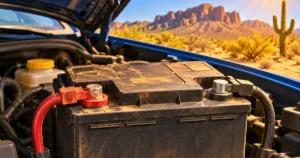
Heat is hard on car batteries. AAA notes that heat is one of the factors that can shorten a car battery’s life. High temperatures can speed up the chemical wear inside a battery, so a long Arizona summer can age a battery even when the car is barely driven.
That helps explain a common experience. A car that started normally before it was parked may struggle afterward, because the battery may have lost charge while sitting, lost some of its overall capacity to heat, or both.
Damage from summer does not always show up right away. A battery that has lost capacity may still start the car on a good day and then let you down later, especially after the car sits again. A slow start after summer is worth paying attention to rather than ignoring.
When 100-degree days tend to arrive and end
If you are planning a season away, it helps to know roughly how long the hottest part of the year runs. The National Weather Service office in Phoenix publishes first and last 100°F dates. Based on its 1991–2020 normals, the average first 100°F day is May 2 and the average last 100°F day is October 5.
A few cautions about those numbers. They are averages, so any given year can start earlier or end later. They do not mean every day between May and October reaches 100°F. And they come from the NWS Phoenix records, not from a measurement taken in Mesa or in your garage or driveway. Still, they give a useful sense of scale: a car parked in late spring and picked up in fall may sit through several months of the region’s hottest weather.
For storage planning, that means thinking about the whole stretch, not just the week you leave. A battery that was borderline in April may face months of heat and self-discharge with no driving to top it up. Nobody can predict exactly how a particular battery will come through that, which is the main reason to look at the battery and charging system before a long park rather than after.
Discharged or Worn Out? Two Different Problems
It helps to keep two situations separate:
- A discharged battery has lost its charge but may still be in reasonable condition. Properly recharged, it may work reliably again.
- A deteriorated battery has lost some of its ability to hold or deliver a charge. Even after charging, it may not perform reliably, especially if the car sits again.
From the driver’s seat, both can feel exactly the same: a slow crank or no start. That is why a jump-start that gets the car running answers only part of the question. It shows the engine started with outside help on that attempt. It does not show whether the battery can hold a charge on its own, and it says nothing about whether the charging system is doing its job.
What to Notice When the Car Will Not Start Normally
Paying attention to what happened during the first start attempt can give a technician useful clues. None of these signs is a diagnosis on its own, but together they can help a technician decide where to begin looking.
What you hear and see
- A slow-turning engine can result from a low battery or a poor connection. A starting-system problem is another possibility.
- A rapid clicking sound with little or no cranking can point to a battery too weak to turn the starter.
- Dim or flickering dashboard or interior lights during a start attempt can suggest low battery power.
- An engine that cranks at normal speed but does not start may have a different problem unrelated to the battery.
- No response at all may involve the battery, the connections or another part of the starting system.
You do not need to keep trying to start the car to collect these clues. Note what happened, and if anything looks or smells wrong, stop and get help.
A quick check before you assume the battery failed
On vehicles with an automatic transmission, the engine is normally designed to start only in Park or Neutral. If the shifter is not fully seated in Park, the car may not crank even with a healthy battery. It is worth noticing where the shifter was, and mentioning it to the shop, before assuming the battery has failed.
Details worth writing down
Before you contact a shop, jot down a few facts while they are fresh:
- Roughly how long the car sat
- Whether it needed a jump, and how many times
- Whether any warning lights came on
- Whether there has been recent electrical work or any new accessories
- How the car was starting before you parked it for the summer
These details can help narrow down the cause faster than a description of the symptom alone.
Battery Safety Comes First
If the battery is visibly damaged, cracked, leaking, swollen or suspected to be frozen, do not handle it or try to jump-start it. Keep sparks, flames and smoking materials away and ask a professional for help. Do not open a sealed battery or disturb its cables to inspect it.
A battery can be unsafe even if damage is not obvious. If you are unsure, ask a professional for help. If you decide to jump-start the car, follow your vehicle manufacturer’s instructions in the owner’s manual. Connection points and procedures vary between vehicles, and the manual is the right guide for your specific car.
Do not handle high-voltage components. For hybrids and electric vehicles, follow the manufacturer’s instructions and seek qualified help if uncertain. If the instructions say a jump is not appropriate in your situation, or anything about the process looks unsafe, stop and get help.
Will Driving Recharge the Battery After a Jump?
After a successful jump, the charging system may put some charge back into the battery, but a short drive may not recharge a deeply discharged battery. Driving also does not establish that the battery is healthy or that the charging system is working correctly. Before driving anywhere, ask a shop or roadside assistance whether the vehicle is safe to drive or needs a tow.
A jump-start is a temporary way to get the engine running, not a test of the battery. A battery that was deeply discharged and one that has deteriorated can look the same after a jump. Testing can help a technician tell which situation is more likely, although no single check guarantees a complete answer.
If the car stalls or a warning light appears while driving, pull over safely when possible and seek roadside help. Do not assume it is safe to continue. If the car cranks slowly or will not start, contact a shop or roadside assistance rather than relying on repeated jump-starts. Repeated jump-starts do not identify the underlying problem and can leave you stranded.
What Should Be Checked Before Replacing the Battery?
A useful evaluation looks at the whole picture rather than assuming the answer. In general terms, it may consider:
- The battery’s state of charge and condition. Is the battery simply low, or has it lost its ability to perform even when charged?
- The connections. Loose or corroded terminals and cables can cause starting problems that look like a weak battery.
- The charging system. If the battery is not being properly recharged while the engine runs, a new battery may end up in the same condition.
- Unusual electrical draw. If the findings suggest the battery is draining faster than it should while parked, further testing may be needed to look for the source.
For more on the topic, see the battery replacement page and the auto electrical diagnostics and repair page.
Ask for the findings and an estimate before you authorize any repairs. A clear explanation of what was checked and what the results showed can help you decide whether the battery needs replacing or whether something else needs attention first.
Planning Ahead for the Next Long Summer Park
If your car regularly sits through the Arizona summer, a few habits can reduce surprises when you return:
- Know your battery’s age. Age and heat work together, so an older battery deserves closer attention before a long park.
- Plan around the whole hot season. Using the NWS Phoenix averages as a rough guide, a car left in spring may sit through a season that includes 100-degree days before you are back. Treat that as a planning estimate, not a forecast.
- Do not ignore slow starts before you leave. Get them checked rather than hoping they go away while the car sits.
- Ask about a check before storage. If the vehicle has already had trouble starting, ask a qualified technician whether the battery and charging system should be tested before another long storage period.
- Ask before using a battery maintainer. If you are considering a maintenance charger while the car is stored, ask a qualified technician which type is compatible with your vehicle and battery, and how to connect it safely. Do not choose one by guesswork.
- Look before you touch when you return. If damage is visible from a safe position, do not touch the battery or try to jump-start it. Ask for professional help.
If the battery is only one item on your list after a long time away, the article on whether your car needs maintenance even if you barely drive it covers other parts of a lightly used vehicle worth thinking about.
Frequently Asked Questions
How long can my car sit in an Arizona summer before the battery goes flat?
There is no single number that applies to every car. It depends on the vehicle, how much its systems draw while parked, the battery’s age and condition, the heat it sits through, and whether it had an external charging source. A newer, healthy battery may handle a long rest better than an older one. If your car struggled after a previous summer, ask about a check before the next one.
If my car starts after a jump, is the battery fine?
Not necessarily. A jump-start shows the engine started with outside help on that attempt. It does not show whether the battery can hold a charge on its own or whether the charging system is recharging it properly. Ask a shop or roadside assistance whether the car is safe to drive, and have the battery, connections and charging system looked at instead of relying on repeated jumps.
Can summer heat hurt my battery even if the car started fine all season?
It can. AAA notes that heat can shorten a battery’s life, and high temperatures can speed up chemical wear inside it. A battery may lose capacity over a hot summer without obvious symptoms, then struggle later, such as after the car sits again. If starts feel slower than they used to, it is worth having the battery and charging system checked.
Will a new battery fix a car that keeps going dead?
Not always. If the battery was drained by an accessory or module that stays on, or by a charging system that is not recharging it properly, a new battery may end up in the same condition. That is why it can help to have the connections, the charging system and any unusual electrical draw checked before deciding a replacement is the whole answer.
What should I tell the shop when I call about a slow start?
Share roughly how long the car sat, whether it needed a jump, whether any warning lights came on, and whether there has been recent electrical work or a new accessory. Describe what you heard and saw during the start attempt, such as slow cranking, clicking or dim lights. Those details can give the technician a better starting point.
Getting Answers Instead of Guesses
A car that struggles to start after an Arizona summer is telling you something, but not always the obvious thing. The battery may just need a proper charge, it may have aged past the point of reliable use, or the real cause may be a connection, a charging problem or an unexpected draw. Testing can help narrow down those possibilities, and staying safe around a damaged battery always comes first.
If your car has been sitting and the first start sounds weak, call or message us before you try to drive it over. Tell us how long the car was parked and what you noticed when you tried to start it. If the car will not start, needed more than one jump, or you are not sure it is safe to drive, ask about having it towed rather than risking a breakdown on the way. Reaching out first also lets you ask about timing, rather than arriving without knowing when the car can be looked at.
Our battery replacement page lists Accurate Automotive at 441 S. Robson in Mesa and provides our phone number.