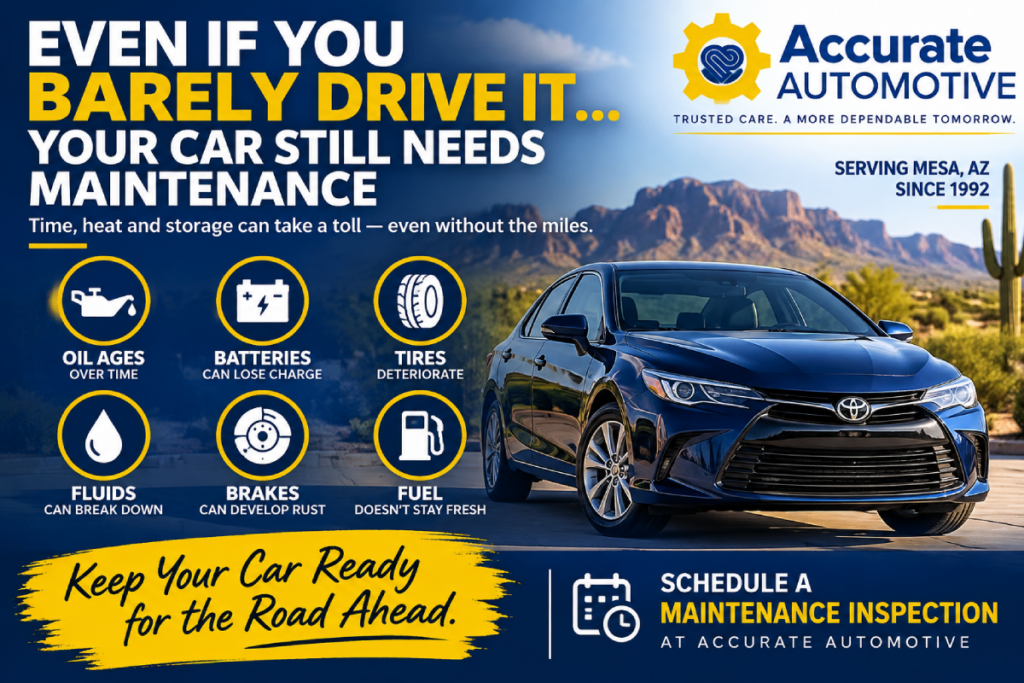
If your car spends most of its time parked, it’s easy to assume maintenance can wait. But low mileage doesn’t stop oil, batteries, tires, fluids, brakes, and fuel from aging.
Car maintenance for rarely driven cars is especially important for Mesa, Arizona drivers, where extreme heat can add stress even when a vehicle isn’t driven every day.
Here’s what can happen when your car sits too long and what you can do about it.
Old Oil Can Still Become a Problem
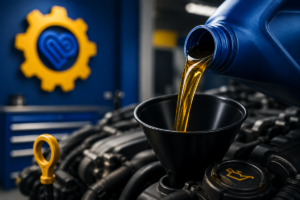
Engine oil doesn’t only work when you’re driving. Oil can be affected by time, moisture, contaminants, and repeated short trips that don’t allow the engine to fully warm up.
A rarely driven car may take months or even years to reach a mileage-based oil change interval. That doesn’t automatically mean the oil should stay in the engine indefinitely.
Getting a full oil change before returning it to regular use is a good idea.
Batteries Can Die While Your Car Is Parked
A parked car still uses small amounts of electricity. Security systems, computers, keyless-entry systems, and other electronics can continue drawing power.
Without regular driving, the alternator doesn’t get enough opportunity to recharge the battery. Eventually, you may turn the key or press the start button and hear nothing but a click.
Here in Mesa, Arizona, battery condition deserves extra attention because heat can accelerate battery deterioration.
Tires Age Even When They Aren’t Rolling
Tires don’t have to rack up thousands of highway miles to deteriorate. Rubber changes over time due to storage, environmental exposure, temperature, and age.
Vehicles that aren’t driven regularly can be at greater risk from tire aging. Exposure to warmer climates can also contribute to the problem.
That’s important for drivers in Mesa, AZ, where parked vehicles can spend long periods exposed to intense heat and sunlight.
Check tire pressure at least monthly and inspect for cracking, bulges, uneven wear, or persistent pressure loss.
Fluids Can Deteriorate With Time
Your vehicle depends on more than engine oil. Coolant, brake fluid, transmission fluid, and other fluids also require attention.
Some fluids can absorb moisture or degrade as they age. Brake fluid, for example, is hygroscopic, meaning it absorbs moisture from the surrounding environment. Excess moisture can contribute to corrosion and reduced braking performance.
This is one of the effects of a car sitting idle that car owners may overlook. The fluid may look like it’s still there, but fluid level alone doesn’t always tell you whether it’s in good condition.
Brakes Can Develop Rust While Sitting
You may expect brakes to wear only when you use them, but sitting creates a different problem.
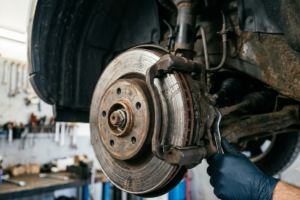
Brake rotors are made of metal, so surface rust can develop when the vehicle stays parked. Light surface rust may clear after normal braking, but heavier corrosion can create noise, vibration, or uneven braking.
If you hear grinding or scraping after a vehicle has been sitting, don’t assume it will automatically disappear. Have a brake repair specialist inspect the brakes if the noise continues or braking feels different.
Fuel Doesn’t Stay Fresh Forever
Fuel age is another concern. Gasoline generally lasts about three to six months before deterioration becomes an issue, while ethanol-blended gasoline can begin losing combustibility sooner.
As gasoline ages, oxidation and evaporation can reduce its ability to burn properly. Old fuel can contribute to deposits, poor ignition, and other fuel-system problems.
If you expect your vehicle to remain unused for an extended period, ask your local mechanic shop about proper storage preparation.
Keep Up Your Vehicle Maintenance With Accurate Automotive in Mesa, AZ
At Accurate Automotive, we’ve been serving Mesa, Arizona since 1992 as a family-owned and operated mechanic shop.
Our ASE-certified technicians use modern vehicle diagnostic equipment and service all makes and models, helping car owners identify problems before a rarely driven vehicle leaves them stranded.
As a NAPA AutoCare Center, we offer warranty options, financing options, and a free local courtesy shuttle for added convenience.
We proudly help Mesa, Arizona drivers and vehicle owners from across Maricopa County in Arizona keep their cars and trucks dependable.
Don’t wait until your parked car won’t start or develops a costly problem.
Contact Accurate Automotive to schedule a maintenance inspection and make sure your vehicle is ready when you need it.
Call us at (480) 890-0409 or reach our Facebook page.
Frequently Asked Questions
Do rarely driven cars still need regular maintenance?
Yes. Even when a car accumulates very few miles, oil, fluids, batteries, tires, brakes, and fuel can deteriorate with time. Maintenance should account for both mileage and vehicle age.
How often should you change the oil in a rarely driven car?
A rarely driven car may not reach its mileage-based oil change interval quickly, but oil can still be affected by moisture, contaminants, and age. Follow the manufacturer’s time-based maintenance recommendations and consider an oil change before returning a stored vehicle to regular use.
Can a car battery die if the vehicle is rarely driven?
Yes. Security systems, computers, keyless-entry systems, and other electronics can continue drawing power while a car is parked. Without sufficient driving, the alternator may not have enough opportunity to recharge the battery.
Do tires deteriorate when a car sits for a long time?
Yes. Tires can age because of time, heat, sunlight, environmental exposure, and storage conditions. Rarely driven vehicles should have their tire pressure checked regularly and tires inspected for cracks, bulges, uneven wear, and pressure loss.
Can brakes rust when a car is parked?
Yes. Brake rotors can develop surface rust while a vehicle sits. Minor surface rust may disappear during normal braking, but persistent grinding, scraping, vibration, or changes in braking should be inspected by a brake repair specialist.
Why is maintenance important for rarely driven cars in Mesa, Arizona?
Mesa’s extreme heat can place additional stress on components such as batteries and tires. Regular inspections can help identify age-, storage-, and heat-related problems before they lead to breakdowns or more extensive repairs.