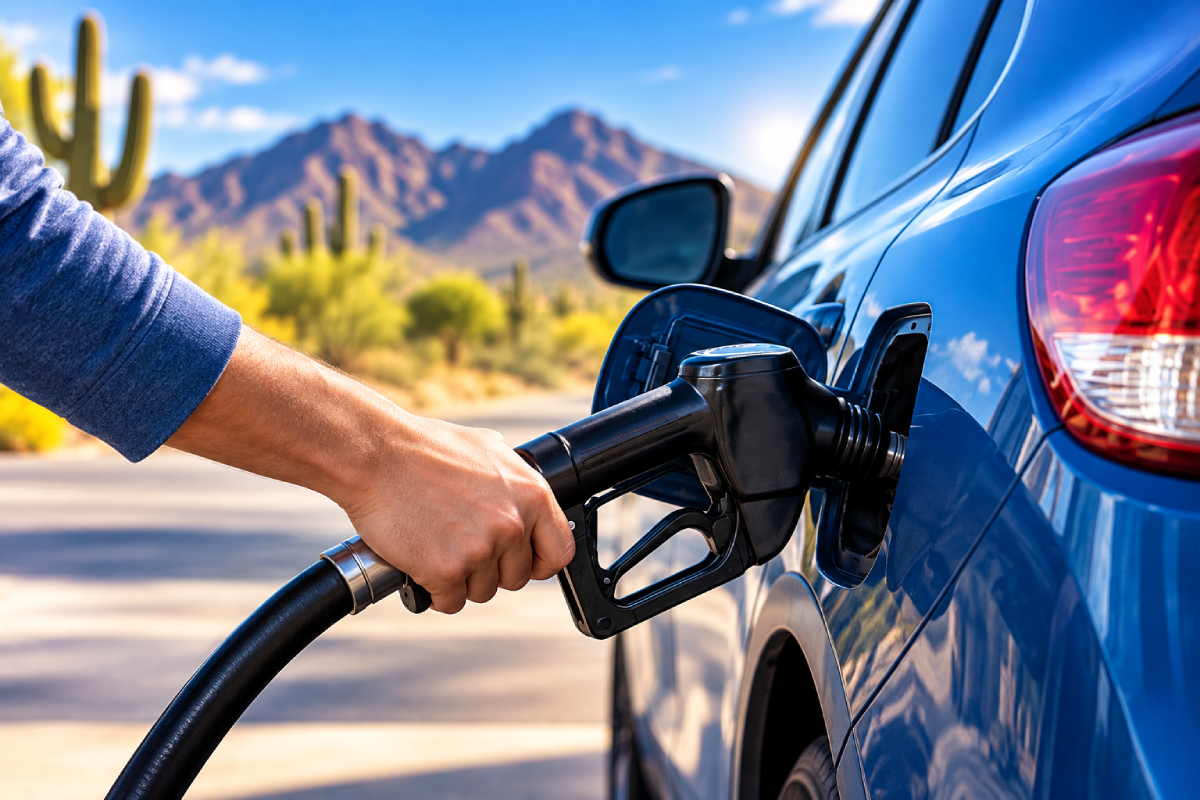
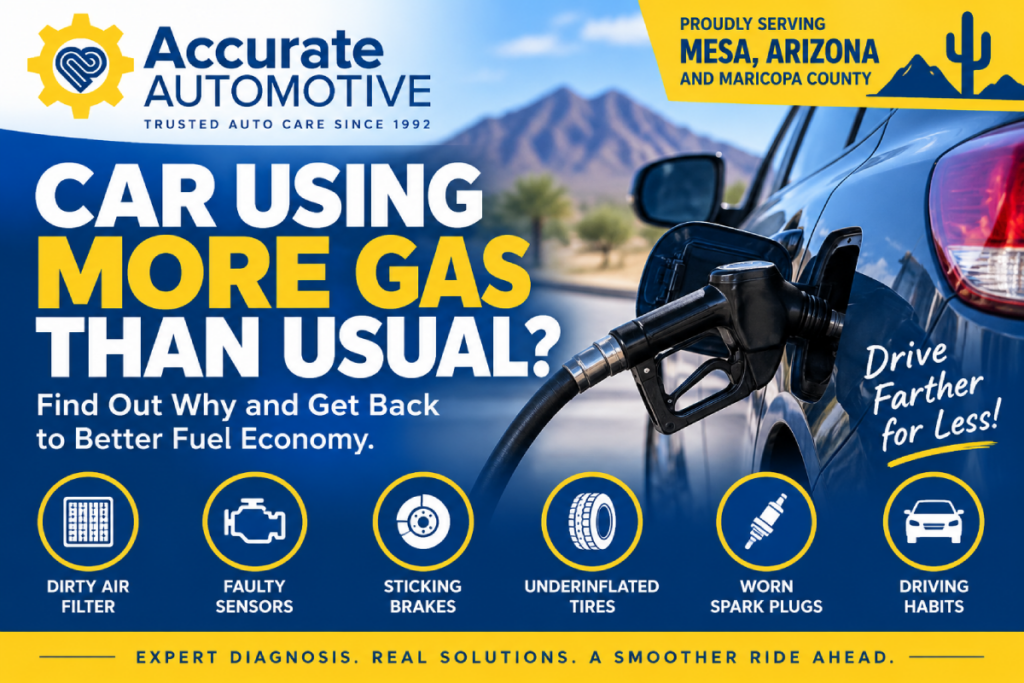
If you’re filling your gas tank more often but haven’t changed how far you drive, your vehicle may be telling you something. A sudden drop in fuel economy can come from something as simple as low tire pressure or a problem that needs an expert technician to diagnose.
For car owners and Mesa, Arizona drivers, identifying the cause early can help reduce wasted fuel and prevent a smaller issue from becoming a more expensive repair.
Dirty or Clogged Engine Air Filter
Your engine needs the right mixture of air and fuel to run efficiently. When the engine air filter becomes excessively dirty or clogged, airflow can be restricted, which may affect engine performance.
Dust is an important consideration here in Mesa, Arizona. Desert conditions and dusty roads can expose your vehicle’s air filter to plenty of airborne debris.
A dirty filter may also contribute to sluggish acceleration or reduced engine performance. On many modern fuel-injected vehicles, replacing a dirty air filter may improve acceleration rather than significantly changing gas mileage, so the filter shouldn’t automatically be blamed for poor MPG.
Faulty Oxygen (O2) Sensor or MAF Sensor
Modern vehicles rely heavily on sensors to determine how much fuel the engine needs. Two important components are the oxygen sensor, commonly called an O2 sensor, and the mass airflow (MAF) sensor.
The O2 sensor monitors oxygen in the exhaust and helps the vehicle’s computer control the air-fuel mixture. A faulty sensor can cause incorrect fuel adjustments and may trigger the check engine light.
The MAF sensor measures the amount of air entering the engine. If it becomes contaminated or fails, incorrect readings can affect fuel delivery, acceleration, idle quality, and fuel consumption.
Sticking Brake Caliper
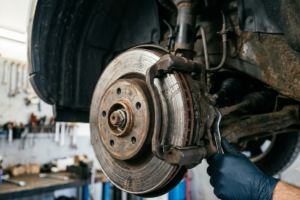
A sticking brake caliper can keep a brake pad partially applied to the rotor even after you’ve released the brake pedal. Your engine then has to work harder to keep the vehicle moving.
You might notice the vehicle pulling slightly to one side, reduced coasting ability, a burning smell, or excessive heat near one wheel. In more severe cases, you may feel like the vehicle is being held back while accelerating.
Because brake problems affect both efficiency and safety, have a professional mechanic inspect the vehicle if you suspect a brake isn’t releasing properly.
Underinflated Tires
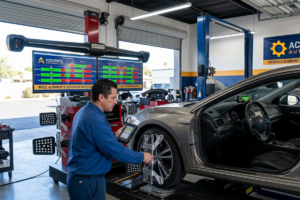
Underinflated tires create more rolling resistance. In simple terms, your engine has to work harder to move the vehicle down the road.
Check tire pressure when the tires are cold and use the pressure listed on your vehicle’s tire-information placard, usually found inside the driver’s door area. Don’t use the maximum pressure printed on the tire sidewall as your target.
Regular pressure checks are particularly useful for drivers across Mesa, Arizona, because temperature changes and everyday tire leakage can change pressure over time.
Worn spark plugs
Spark plugs ignite the air-fuel mixture inside the engine cylinders. As plugs wear or become fouled, the engine may not burn that mixture as effectively as it should.
Depending on the problem, you may experience rough idling, hesitation, difficult starting, misfires, a check engine light, or declining fuel economy.
Spark plug replacement intervals vary significantly between vehicles, so don’t replace them based on a generic mileage recommendation. Check the maintenance schedule specified by your vehicle manufacturer.
If the engine is misfiring or running poorly, a fuel system repair specialist should determine whether worn plugs, ignition coils, fuel delivery, sensors, or another problem is responsible.
Driving Habits
Sometimes there isn’t anything mechanically wrong with the vehicle. Changes in driving habits can have a noticeable effect on how quickly you empty the tank.
Hard acceleration, frequent braking, extended idling, higher speeds, heavy loads, and repeated short trips can all increase fuel consumption. Air conditioning use and stop-and-go traffic can also affect real-world MPG.
Accurate Automotive Helps Mesa Drivers Stop Wasting Fuel
Accurate Automotive has been serving Mesa, Arizona since 1992 as a family-owned and operated auto repair shop.
Our certified and highly trained auto technicians can identify the actual cause before you start spending money replacing parts that may still be working properly.
We service all makes and models for car owners and drivers in Mesa, Arizona, and across Maricopa County in Arizona.
Don’t keep paying for extra gas without finding out why your mileage has dropped.
Contact Accurate Automotive to schedule an inspection and let our team diagnose what’s causing your vehicle to use more fuel.
Call us at (480) 890-0409 or reach our Facebook page.
Frequently Asked Questions
Why is my car using more gas than usual?
A car may use more gas because of underinflated tires, faulty O2 or MAF sensors, worn spark plugs, dragging brakes, driving habits, or other engine and fuel-system problems.
Can low tire pressure cause poor gas mileage?
Yes. Underinflated tires increase rolling resistance, forcing the engine to work harder and potentially increasing fuel consumption.
Can a bad O2 sensor reduce fuel economy?
Yes. A faulty oxygen sensor can send inaccurate information to the vehicle’s computer, resulting in incorrect fuel adjustments and reduced fuel efficiency.
Can worn spark plugs make a car use more fuel?
Worn or fouled spark plugs can contribute to inefficient combustion, misfires, hesitation, rough idling, and declining fuel economy.
Can a sticking brake caliper affect gas mileage?
Yes. A sticking brake caliper can keep a brake pad partially engaged, creating resistance that makes the engine work harder and consume more fuel.
When should I have poor gas mileage diagnosed?
If fuel economy drops suddenly or you notice a check engine light, rough running, poor acceleration, unusual smells, excessive wheel heat, or other symptoms, schedule a professional inspection.