A check engine light can come on for something as simple as a loose fuel cap or a problem that needs prompt attention.
Here are eight common check engine light causes, what you might notice, and when to get a check engine light diagnostic from a repair shop in Mesa, Arizona.
1. Loose, damaged, or missing fuel cap.
A cap that isn’t sealed properly can let fuel vapor escape and trigger the light. Check that it’s tight and look for cracks or a damaged seal. If the light stays on after several drives, have the system checked.
2. Failing oxygen (O₂) sensor.
Oxygen sensors measure exhaust gases so the engine computer can adjust the fuel mixture. A failing sensor may reduce fuel economy or increase emissions, even when the car feels normal.
3. Faulty catalytic converter.
The converter helps reduce harmful exhaust emissions. A failing one can cause sluggish acceleration, poor fuel economy, or a sulfur-like smell, though symptoms vary.
4. Evaporative emissions (EVAP) system leak.
The EVAP system captures fuel vapors and keeps them from escaping. A loose cap can be one cause, but cracked hoses, a faulty valve, or a leak elsewhere may also trigger the light. These leaks don’t always affect how the car drives, so a system test can help locate the source.
5. Faulty mass airflow (MAF) sensor.
The MAF sensor measures how much air enters the engine. If its reading is inaccurate, the engine may idle roughly, hesitate, or use more fuel. An expert technician can test the sensor and its wiring before recommending a replacement.
6. Worn spark plugs or failing ignition coils.
These parts help ignite the engine’s air-fuel mixture. When they wear out or fail, you might notice rough running, shaking, or trouble accelerating. A misfire can also put extra stress on the catalytic converter. If the check engine light is flashing, reduce your speed, pull over somewhere safe, and arrange prompt service.
7. Bad thermostat.
A thermostat that sticks open or closed can keep the engine from reaching or maintaining its normal temperature. The light may come on even if there’s no obvious change in how the car runs. Don’t ignore overheating or a rising temperature gauge; stop driving when it’s unsafe and get help.
8. Aftermarket accessories or installation issues.
A remote starter, alarm, intake, or other accessory may trigger a warning if it’s incompatible or installed incorrectly. Recent work can also leave a connector loose or wiring disturbed. Tell the mechanic what was installed or repaired and when.
Get a check engine light diagnosis
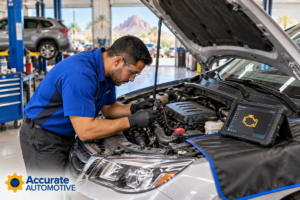
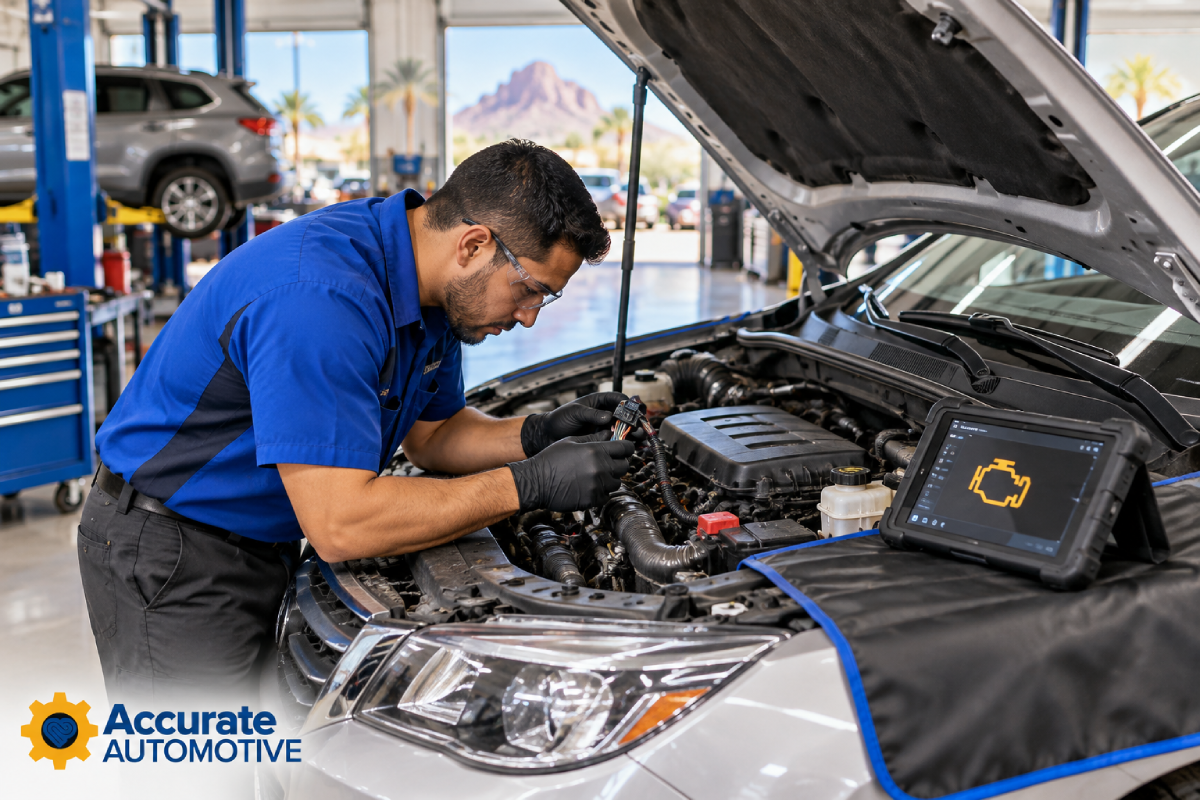
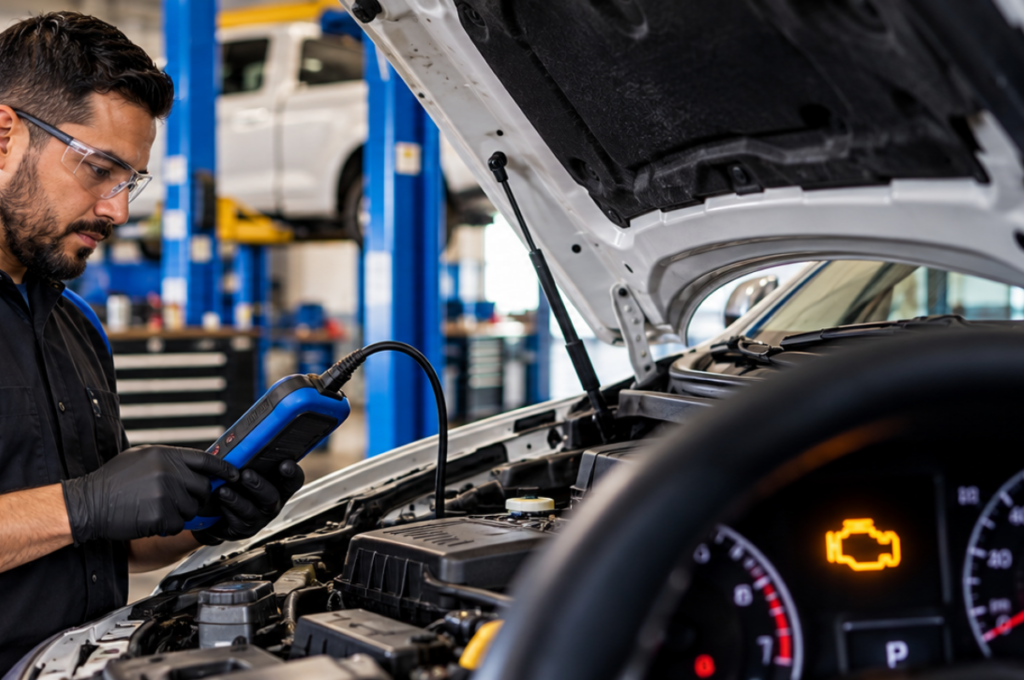
A scan tool reads diagnostic trouble codes, but a code points to a system or condition; it doesn’t automatically identify the failed part.
For example, an oxygen sensor code may reflect a sensor fault or an issue affecting its readings. A proper diagnosis check engine light process can include reviewing codes and data, inspecting wiring and related parts, and testing the system.
Pay attention to how the car behaves. A steady light with no other symptoms usually means you should schedule service soon. A flashing light, severe shaking, loss of power, or signs of overheating call for prompt attention.
If you’re unsure, contact a check engine light repair specialist for guidance.
Have Accurate Automotive check your light in Mesa, AZ
If your check engine light is on, schedule a diagnostic with Accurate Automotive.
We’re a family-owned and operated complete auto repair service center serving Mesa since 1992.
Our ASE-certified technicians use diagnostic equipment to help identify the cause and explain practical next steps.
We’re a NAPA AutoCare Center, and Warranty Available and Financing Options are offered.
Ask about our Free Local Courtesy Shuttle when you book.
Contact Accurate Automotive, your local car repair shop in Mesa, Arizona, to arrange an automotive maintenance service with our professional mechanics and an expert technician.
Call us at (480) 890-0409 or reach our Facebook page.
Frequently Asked Questions
Can a loose fuel cap turn on the check engine light?
Yes. A loose, damaged, or missing fuel cap can let fuel vapor escape and trigger the light. Tighten the cap and check its seal. If the light stays on after several drives, have the system checked.
What are common reasons a check engine light comes on?
Common causes include a fuel cap or EVAP leak, a failing oxygen or mass airflow sensor, a catalytic converter problem, worn spark plugs, failing ignition coils, a bad thermostat, or an accessory installation issue.
Does a diagnostic trouble code tell me which part to replace?
No. A code points to a system or condition; it doesn’t automatically identify the failed part. A technician may need to review data, inspect related parts and wiring, and test the system.
Can I drive with the check engine light on?
A steady light with no other symptoms usually means you should schedule service soon. If the light is flashing, the engine is shaking, power drops, or the temperature rises, seek prompt attention and stop somewhere safe if needed.
Why might a bad oxygen sensor trigger the light?
The oxygen sensor measures exhaust gases so the engine computer can adjust the fuel mixture. A failing sensor may reduce fuel economy or increase emissions, even if the car seems to run normally.
How long should I wait after tightening the fuel cap?
If the cap was loose, tighten it and see whether the light goes out after several drives. If it stays on, have the system checked; another issue may be triggering the warning.